
1. Advantages of Edge Grinding (Beveling / Chamfering)
 Prevent wafer edge chipping. During the manufacturing of wafers, they are often impacted by robot arms, which could cause edge breakage(chipping) and form areas of stress concentration. These areas of stress concentration could continuously release contaminating particles during usage, thereby affecting the product yield.
Prevent thermal stress concentration. Wafers undergo numerous high-temperature processes during usage, such as oxidation and diffusion. When the thermal stress generated by these processes exceeds the strength of the wafer lattice, dislocation and stacking faults will occur. Edge grinding can exactly avoid these defects at the edge of the wafer.
Increase the flatness of the epitaxial layer and photoresist layer at the edge of the wafer. In epitaxial processes, the growth rate of the sharp angle region is higher than that of the plane. Therefore, using an unrounded wafer is likely to produce protrusions at the edge. Similarly, when using a spin coater to apply photoresist, the photoresist solution may accumulate at the edge of the wafer, affecting the accuracy of mask alignment.
2. DYAN-X Control Software
DYAN-X is a human-machine interface (HMI) control software designed specifically for the Wafering Series, based on the Windows operating system. The software features an intuitive and straightforward design, enabling users to quickly understand and easily operate the system. Learn More
3. CCD Inspection and Detection System (CID)
The equipment features a high-precision CCD visualized inspection system, utilized for both alignment and detecting defects. Learn More
4. CCD Angularity Inspection (Optional)
CCD angle detection involves using a high-resolution CCD camera to inspect the angularity of the chamfered edge of wafers. Learn More
5. Notch and Flat Grinding (Optional)
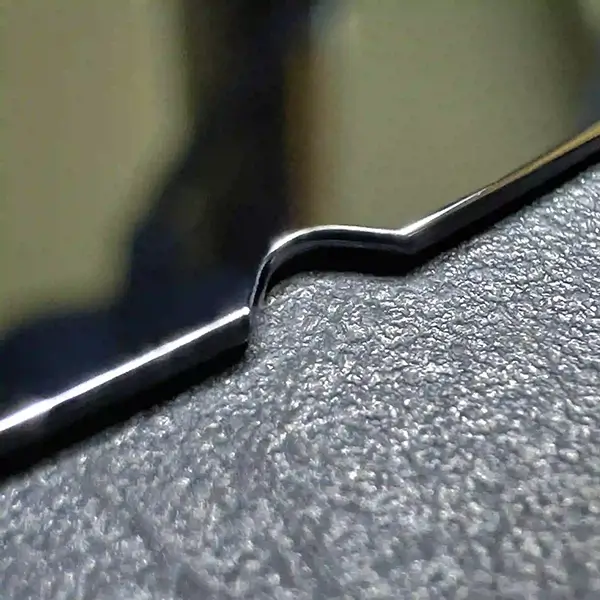 The notch and flat features are essential for wafer alignment, enabling automated machinery to accurately position the wafer during processing. They act as reference markers for wafer orientation, allowing precise handling by providing clear alignment indicators.
Therefore, the notch and flat grinding must achieve a high degree of precision to ensure correct positioning in subsequent manufacturing steps.